(561) 913-8786 Se habla Español
Professional sealing & stripping services in South Florida. Se habla Español
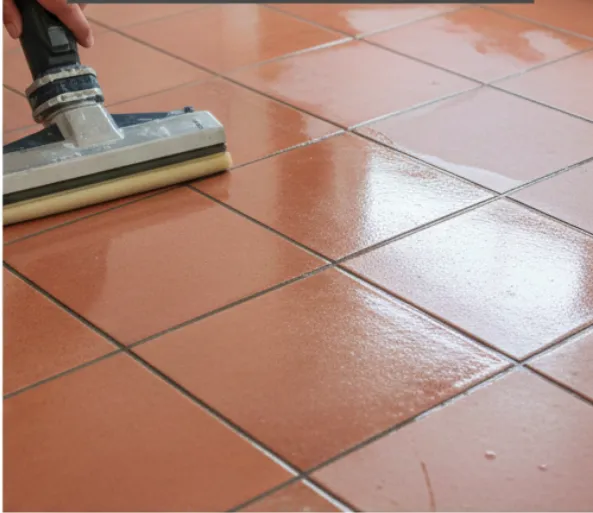
Sealing and stripping are two complementary but opposite processes in professional floor maintenance, especially on porous surfaces such as marble, tile, terrazzo, polished concrete, and commercial vinyl floors. While one protects the surface, the other deep cleans by removing layers of old wax or sealant.
Stripping, also known as wax removal, is an aggressive cleaning process that completely removes accumulated layers of wax, old sealant, embedded dirt, and residues from previous cleaning products.
Over time, commercial and residential floors accumulate multiple layers of buildup that make the floor look dull, yellowed, sticky, or marked with traffic patterns that are impossible to clean superficially:
Chemical Application
A stripper is spread over the floor — a chemical solution designed to dissolve layers of wax and sealant.
Activation Time
The chemical is left to sit so that it can penetrate and soften the accumulated layers.
Mechanical Scrubbing
A rotary machine with an abrasive pad is used to lift and emulsify all the old residue.
Extraction
The resulting sludge (a mixture of chemicals, old wax, and dirt) is collected with a wet vacuum or automatic scrubber.
Rinsing
The floor is repeatedly rinsed with clean water to remove any chemical residue, leaving the surface completely bare and porous.
Result: A floor that is 100% clean at its base layer, ready to receive a new sealant or wax coating.
Sealing is the process of applying a protective barrier to a clean, porous surface (such as marble, grouted tile, terrazzo, or cement) to prevent dirt, liquids, and bacteria from penetrating it. Without a proper sealant, porous surfaces act like sponges:
Surface Preparation
Sealing should always be done after thorough cleaning or stripping, with the floor completely dry.
Sealer Application
The sealer (penetrating or coating, depending on the type of floor) is spread evenly with a roller, mop, or sprayer.
Penetration Time
The product is allowed to penetrate the pores of the stone or cement.
Cleaning Up Excess
Excess is removed from the surface (for penetrating sealants) or allowed to dry (for coating sealants).
Curing
The product is allowed to dry completely before exposing the floor to traffic.
Result: A floor with an invisible barrier that repels liquids, resists stains, and is much easier to clean on a daily basis.
Explore More
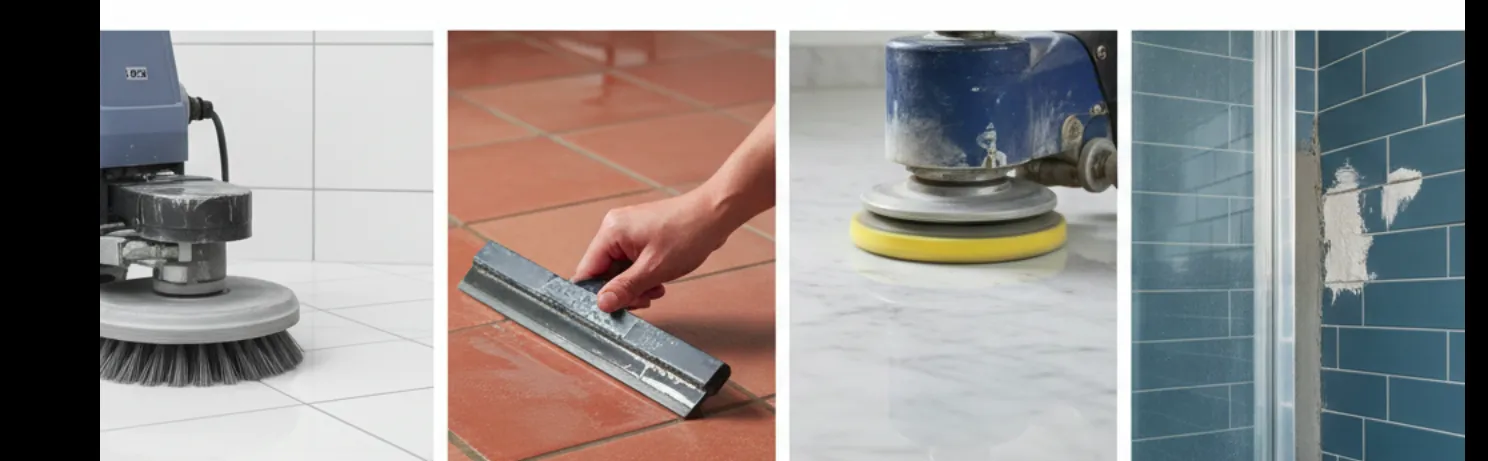
Deep extraction cleaning for all types of tile surfaces, restoring the original look of your grout lines.
Professional polishing, honing, and repair for marble surfaces to bring back their luxurious natural shine.
Regrouting, recaulking, and fixing loose tiles in shower stalls to prevent water damage and mold.
Professional kitchen, bath and baseboard recaulking for sinks, countertops, and backsplashes to prevent water damage, leaks, and mold buildup.
Restore, protect, and permanently recolor your grout lines for a clean, uniform, and like-new appearance. Our color sealing also protects against stains, mold, and future discoloration.